Sex Selection and Family Balancing: Medical Perspective

Sex selection and family balancing are often discussed, but not always clearly understood. Understanding what is possible, when it is appropriate, and the principles that guide these decisions is important for anyone exploring fertility options. Join us this Friday as Dr. Debbie provides clear, professional insights into this important topic. Friday, 24th April 2026 3:00 PM Here on Facebook | YouTube | Instagram Informed decisions begin with the right knowledge. Don’t miss this important session. CLICK TO WATCH

Read More

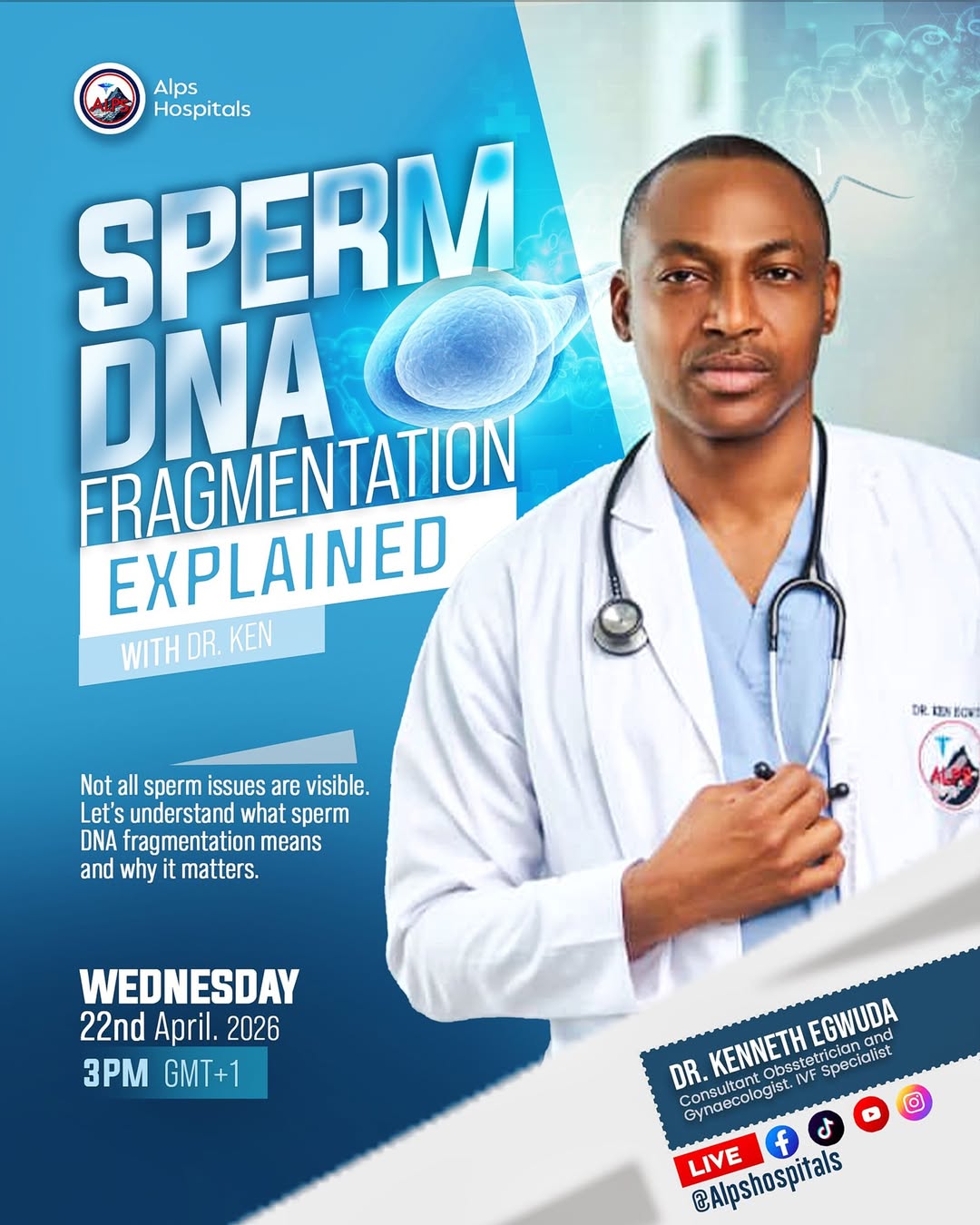
Sperm DNA Fragmentation Explained

When it comes to fertility, not all factors are visible on routine tests. Sperm DNA fragmentation is one of those hidden factors that can affect fertilization, embryo development, and overall outcomes. Understanding it can provide important clarity, especially in cases of unexplained infertility or repeated IVF challenges. Join us this Wednesday as Dr. Kenneth Egwuda explains it in a simple and practical way. Wednesday, 22nd April 2026 3:00 PM Here on Facebook | YouTube | TikTok | Instagram Clarity is a key part of the journey. #ttc#askdocken#sperm#alpshospitals#fyp

Read More

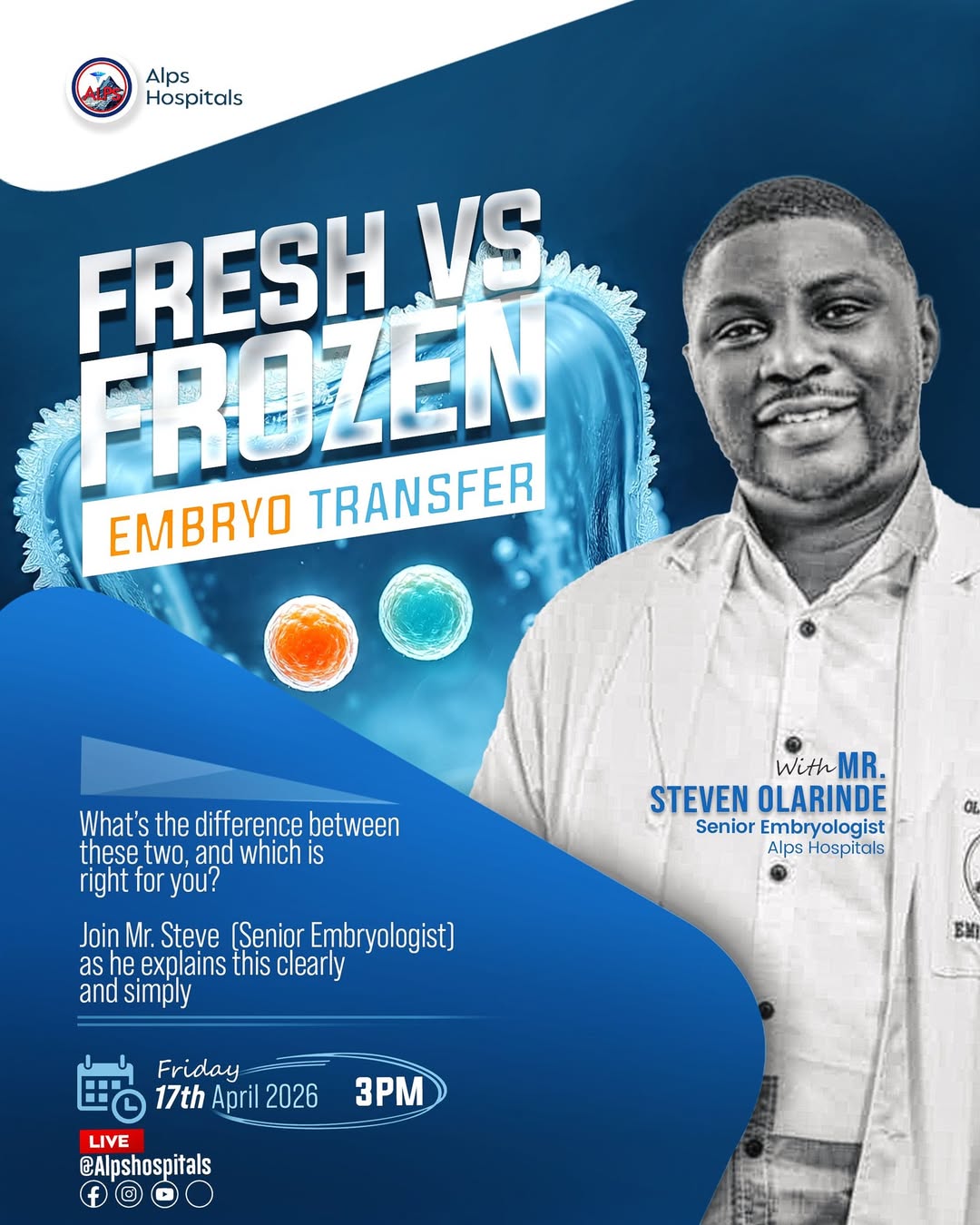
Fresh Vs Frozen embryo transfer

Fresh Vs Frozen embryo transfer Understanding this difference can make your IVF journey clearer and more informed. Join us this Friday as our Senior Embryologist, Mr. Steve, explains it in a simple and practical way. Friday, 17th April 2026 3:00 PM Here on Facebook | YouTube | Instagram Clarity makes all the difference. #fertility#ttc#alpshospitals CLICK TO WATCH

Read More

ICSI: When and Why it’s Needed

ICSI: When and Why it’s Needed In IVF, sometimes fertilization doesn’t happen as expected. This is where ICSI (Intracytoplasmic Sperm Injection) comes in. It is a specialized technique where a single sperm is carefully injected directly into the egg to support fertilization. But the key question is, when is it really needed? Join us this Wednesday as our Senior Embryologist, Mr. Steve, explains when and why ICSI is used, and how it can improve outcomes in the right cases. Wednesday, 15th April 2026 3:00 PM Here on Facebook | YouTube | Instagram Understanding your options is the first step to making the right decisions. #ttc#ivf#alpshospitals#fertility#livesession CLICK TO WATCH

Read More

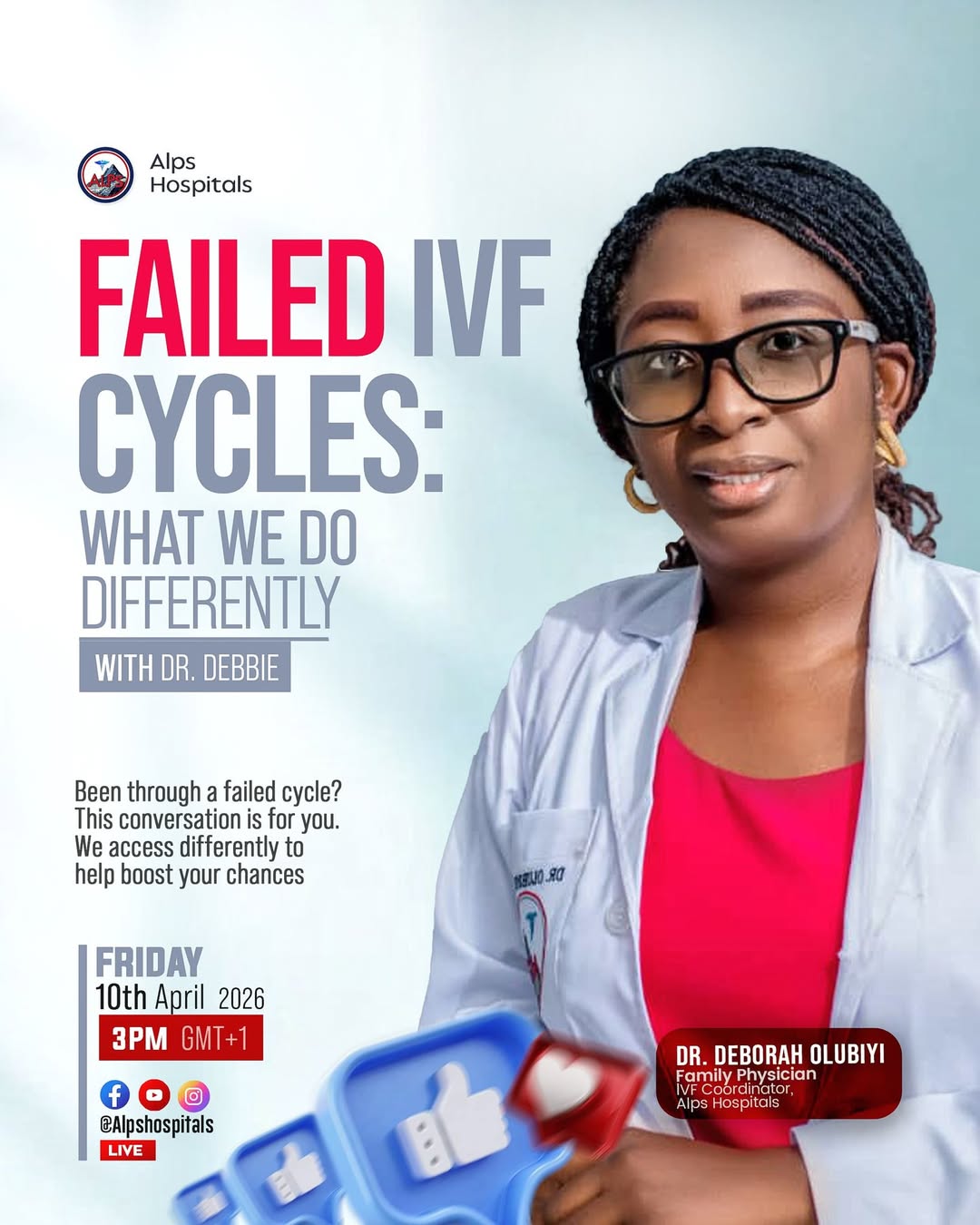
Failed IVF Cycles: What we do differently

Failed IVF Cycles: What we do differently A failed IVF cycle can be difficult – physically, emotionally, and mentally. But it’s important to know this: it is not the end of the journey. There are reasons why cycles may not succeed and more importantly, there are ways to reassess, adjust, and move forward with a better approach. Join us this Friday as Dr. Debbie shares what we do differently here at ALPS Hospitals after a failed IVF cycle, and how we help you move forward with renewed clarity and confidence. Friday, 10th April 2026 3:00 PM Here on Facebook | YouTube | Instagram You’re not alone in this. And your story doesn’t end here. CLICK TO WATCH

Read More

Dr. Kenneth Egwuda receiving an Award for Alps Hospital

The pan African icon award is an honorary award for individuals who have paved a way for others in their respective fields. These leaders have positively impacted Africa hence they are worthy to be celebrated and this year was no different as Dr Kenneth Egwuda was awarded 2022 “Pan African Icon of Medical Renaissance award” on the 19th of August, rewarding excellence. Dr. Kenneth Egwuda (IVF Specialist, Consultant Gynaecologist), is currently the CMD/CEO of Alps Hospitals and Diagnostics. The organizers of the prestigious awards, Youth Partnership for Africa’s Development (YOUPAD), described him as the resurgent hope for the youth dream in Africa. The well-deserved award is in recognition of his giant strides and immense contributions to the growth and development of the healthcare delivery system in Plateau State and Nigeria at large. He is widely recognized as a capacitated influential leader, a vastly experienced consultant gynaecologist and the force behind the resurgence of modern medicine in the state. In the letter of recognition by the President of YOUPAD, he extols Dr Kenneth Egwuda for his leadership ideology and high entrepreneurship excogitation. He also commended him for his hard work and dedication to humanitarian service via the health sector. Receiving the award, Dr Kenneth Egwuda, thanked them for the prestigious honour and commended the body for its strident commitment to promoting responsible youth and leadership development in Africa.  He remarked: ‘‘Thank you for your interest and honour. I’m further encouraged to contribute even more to supporting responsible youth development in Africa.”

Read More

IN VITRO FERTILIZATION

WHAT IS IN VITRO FERTILIZATION? In Vitro Fertilization (IVF) is a technique whereby egg fertilization takes place outside the woman’s body. Embryos are created in the laboratory and then placed in the woman’s uterus to stimulate development and achieve pregnancy. This process involves several steps which need to be adequately coordinated. Designing made-to-measure treatment for the patient’s needs, team quality and the clinic’s technology are key to success. PREPARATION AND STUDY OF THE PATIENTS FOR THE IVF PROCEDURE Every patient is a unique individual. For this reason, our treatments at Alps hospitals and Diagnostics are tailored to every one of our patients. Our goal is to locate the source of infertility among couples and select the most effective treatment. The male’s sperm and hormone levels are analyzed and, if necessary, a urological assessment is performed. In the case of women, their cervical canal and endometrial cavity are examined, as well as possible alterations in their fallopian tubes and their menstrual cycle patterns. These are accompanied by detailed assessments of the couple’s sexual health. This process ensures that IVF is the correct solution to the patients’ infertility problems and that they are physically and psychologically ready to begin the cycle. If this is not the case, the patients are offered other treatment options. OVARIAN STIMULATION In order to maximize the possibility of pregnancy, we need to obtain more than one oocyte, which is the number a woman’s ovary normally produces. In order to stimulate the production of several oocytes and guarantee their quality, we administer a combination of pharmaceutical drugs. Response is monitored using vaginal ultrasound scans and timely blood analyses: ovulation induction. The whole process lasts approximately between 8 and 12 days, depending on each case. The treatment can be cancelled if a low or exaggerated ovarian response is observed. EGG RETRIEVAL Once the oocytes are mature, we retrieve them with the guidance of a vaginal ultrasound scan under local anaesthesia and light sedation so that it is completely painless. This process only takes 15 minutes and does not require an operation, being hospitalized, stitches or the use of general anaesthesia. LABORATORY FERTILISATION The retrieved eggs are taken into the IVF laboratory where they are prepared for insemination.  Oocytes and spermatozoids are placed together for several hours within an incubator which provides the ideal conditions for fertilization to take place and the subsequent development of pre-embryos. The number of fertilized eggs will not be known until the next day ICSI (INTRACYTOPLASMIC SPERM INJECTION) ICSI is performed on oocytes when the reproduction biologist in charge deems it necessary or when it has been previously agreed upon. The Intracytoplasmic Sperm Injection (ICSI), consists in the introduction of a single spermatozoid inside a mature egg to achieved fecundation. ICSI proved to be a revolution in assisted reproduction techniques, as it overcomes most male infertility problems. This technique is used in fertilization when sperm suffers from low count, an abnormal morphology, poor motility or when the sperm is unable to fertilize through IVF. It can also be used with patients suffering from a blocked sperm duct. In this case, a puncture is made in order to extract sperm directly from the testicles. This procedure is performed using a microscope. Micromanipulation equipment is also used, allowing us to stabilize the egg softly and subsequently place the sperm inside it. Sperm selection is essentially guided by morphological features, although other methods (MACS, IMSI, and PICSI) can also be used. CULTURING THE EMBRYOS Fertilization is followed by development in a culture medium that provides everything that is needed for growth. The embryos are assessed during development. Growth is periodically assessed because not all human embryos reach the blastocyst stage. It is important to keep in mind that not all of them will fertilise and become viable embryos. There will be good and poor quality embryos and others that will simply block. TRANSFERRING THE EMBRYOS Once the blastocyst stage has been reached, embryo transfer takes place. It is an essential stage during treatment. It entails placing the embryo in the mother’s uterus.  The procedure is performed using an abdominal ultrasound scan. The culture medium containing the embryo is positioned inside the uterus. It is a quick and painless procedure. Embryos that have not been transferred and wish to be preserved, after vitrification, proceed to storage. After identification, they are deposited in an exclusive location in the cryogenic tanks of our laboratories. For complete security, this location is not shared with other samples, nor with other patients, to protect them from potential cross-infection or inaccuracies. TESTING FOR POSITIVE PREGNANCY 13/14 days after the progesterone medication began, a blood sample is taken from the patient in order to determine if she is pregnant or not. It consists of detecting beta-hCG levels in blood since this hormone is produced by the embryo and passed on to the mother. It is the first measurable sign sent by the embryo. If the patient is not pregnant, the medical team involved in the course of treatment assesses the causes and decides what steps need to be taken. The patient is given an appointment in order to be able to tell her about the team’s evaluation of the situation.

Read More

Infertility: Causes, Symptoms and Treatment

Infertility is the inability of a couple to conceive after having regular unprotected intercourse for 12 months. From the point of view of the age of women, it is recommended that a woman less than 35 years, should seek help after a year and if she is over 35 years, she should seek help after six months.  A common misconception is that infertility is only a woman’s problem. However, this is not true. In fact, for almost 50% of infertile couples, the cause is related to the male partner, either alone or in addition to a female factor. Causes of infertilityThere are four main causes of infertility:  Diagnosis of InfertilityInfertility diagnosis typically begins with a comprehensive history and physical examination, which is followed by diagnostic testing. It is very important to do certain investigations to know what the problem is. There are four main tests that are identified as the minimum standard to investigate infertility.  From these tests, we will be able to identify about 80% of the causes of infertility. However, we diagnose unexplained infertility when we cannot see anything from these four tests. This happens in about 10 to 20% of the population of people experiencing infertility. Treatment of infertilityWe can look at the treatment of infertility  Conclusion: Always remember, together we can conquer infertility

Read More

Factors That Contribute to The Success of IVF

We all know that IVF works, but also it fails. When IVF fails, it can be very frustrating, often leading to anger, disappointment, dashed hopes, and sometimes a lot of blame being traded, because of everything that has been invested into it; money, time, and emotion. A cycle of IVF is akin to what happens in the human body in the woman in a month. Everything that we do in IVF is to replicate what happens in the woman’s body on a monthly basis. So a cycle is like what happens to a woman in a month.  Human reproduction consists of two major steps, fertilization and implantation. Fertilization is the bringing of the sperm and egg together and implantation is the uterus accepting the embryo that has been presented to it. Let’s look at it from the point of planting a seed that germinates. We know every seed that you plant germinates, but in this case, the embryo will represent the seed and the lining of the uterus will represent the soil. It is when you see the germination or the sprouting of the seed, when it grows out of the soil, that you can say that you have succeeded. The same thing is when you say a pregnancy, or you can detect pregnancy, that is when we know that implantation has taken place.  For this to happen, there must be some raw materials. We need good quality eggs, not just any egg. We need good quality sperm, and then we need the proper union of the sperm and the egg or what we call fertilization. IVF means In vitro fertilization, fertilization outside the body. So what happens in fertilization is that there is exchange of genetic materials between the man and the woman. So a lot of genetic factors come into play here. After the union of the sperm and the egg, what is needed are good quality genetically normal embryos. When you have good quality, genetically normal embryo, then your uterine lining needs to be of good quality. So that there can be interaction between the good quality genetically normal embryo and the lining of the uterus. This is where the experience of the doctor comes in., to do a smooth embryo transfer.  After all these procedures, implantation can now take place. Which is just the synchronization between the embryo and the lining of the uterus. That is when you can have a successful IVF cycle. We know that the success rate of IVF when you are less than 35 is a peak, gives you about 30 to 40% baby take home rate and that decreases to 5% when you are about 40. In the body naturally, a woman has a chance between 20-25% every month. In other words, IVF delivers better success rate than what nature itself can present. So IVF is a little bit more efficient than nature. We know that human reproduction is one of the most inefficient processes in the body. And this is not surprising because there are so many quality control systems in the body. This is why we can beat our chest and say that IVF babies are normal babies.  Factors that determine the quality of eggs Age: Age is the most important factor in determining the quality of eggs. Drugs: So many clinics will devise ways because especially in our environment, where power is not stable, many people will devise a way to store drugs. The drugs must be properly stored so that the cold chain is maintained, and also, the administration of the drugs is important. If it is supposed to be under the skin, you cannot put it into the muscle, if you want to get the result that you want. One other thing about drugs is the timing. If it is 10 o’clock, then it better be 10 o’clock. If you use it at 11 o’clock for any reason, you must tell them at your clinic that you didn’t take your drugs at the appropriate time so that we know if we need to juggle things around. It is much better for you, to keep to the time that was allotted for the drugs. Then the stimulation protocol is of importance. You must use the right stimulation protocol and the right dosage of drugs in order for you to get good quality eggs.  The other thing we talk about is sperm quality. Age also contributes to sperm quality. When we talk about sperm quality, some people get it wrong. The function is what is important in sperm, not the morphology. Don’t forget that when we are doing semen analysis, what we look out for most of the time is the morphology of this sperm. We talk about volume, count, and morphology. But here the important thing is actually the function of the sperm, which we cannot find any test for now. But there are some other things that we can do. Then the exposure to very dangerous toxins. For example, people who smoke, gardeners who are exposed to chemicals and even some people who were exposed to radiation. There is something we call DNA damage, which we now see in men who were exposed to these toxins. For example, people who work in petrochemical industries. That is one thing we are also looking at, which might affect the quality of the sperm and its function. If the quality of the sperm and the quality of the eggs are not good, it might be challenging to have a baby. The embryo quality is so important. Sometimes the embryo looks normal but they are not good quality, genetically normal embryos. If there is any error here, this is where age comes in, if either the man or the woman are advanced in age. You can have embryos that are looking normal, but are genetically abnormal. One other thing that can contribute apart from age is the condition in the laboratory. When the transfer depends on the doctor and the…

Read More